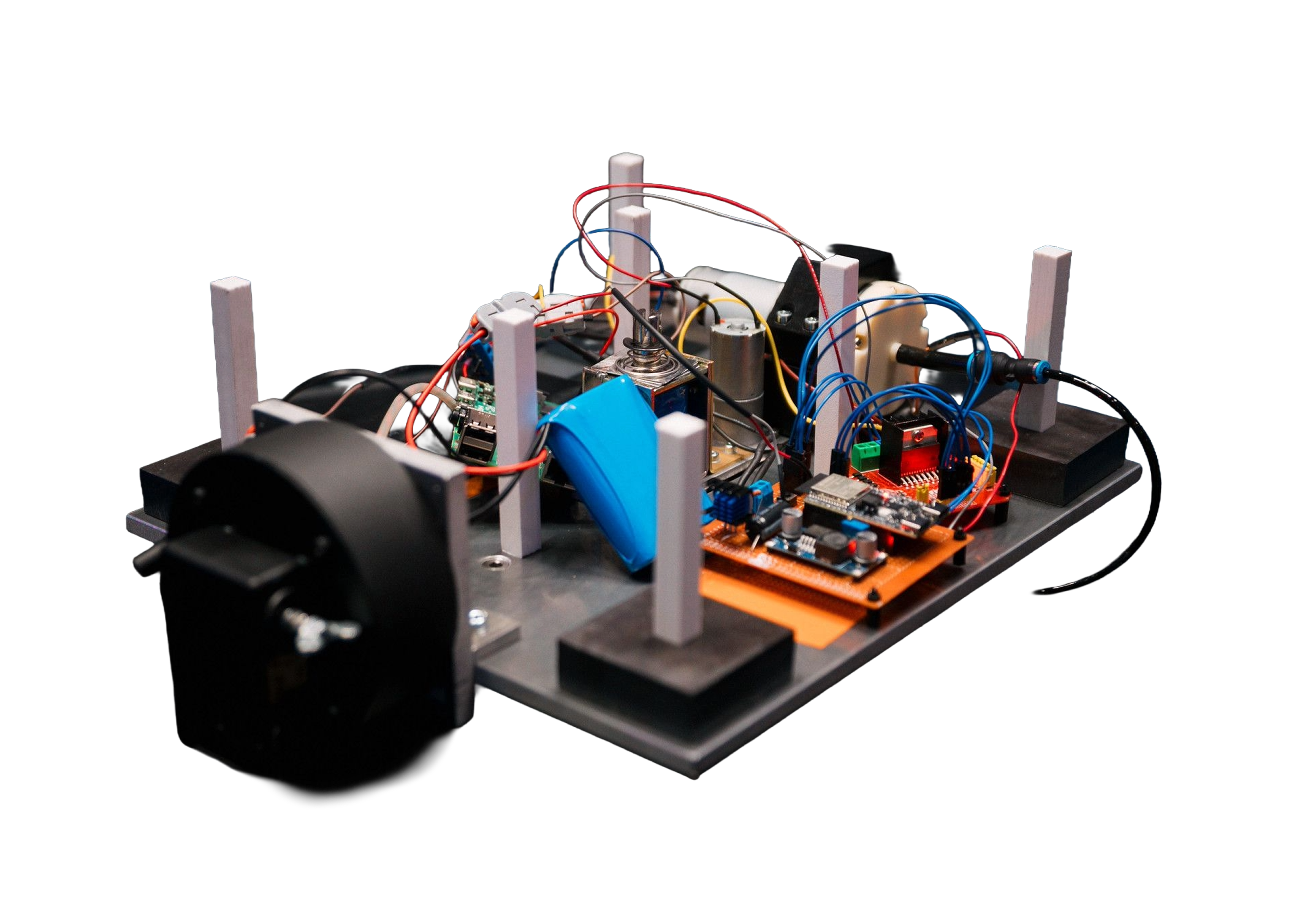
Sponsored by Aurora Propulsion Technologies
Aurora needed an repeatable in-house testing process for their plasma brake product, which is a tether-based device that deorbits satellites at the end of their mission.

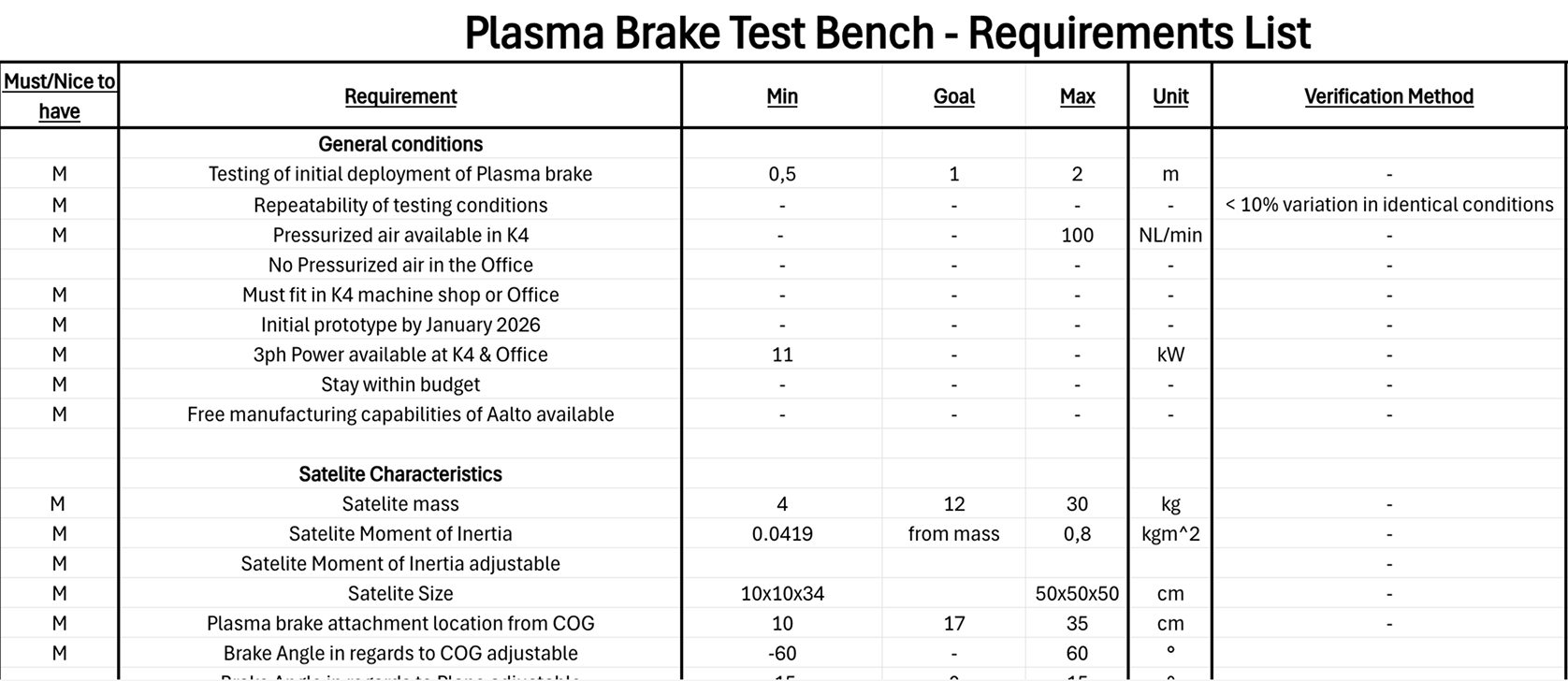
We began by understanding the problem. Through research and interviews, we compiled a requirements sheet capturing every parameter.
e.g. the mass and moment of inertia of the tested hardware; the size and range of motion the engineers expect; how controllable and operable the system needs to be …
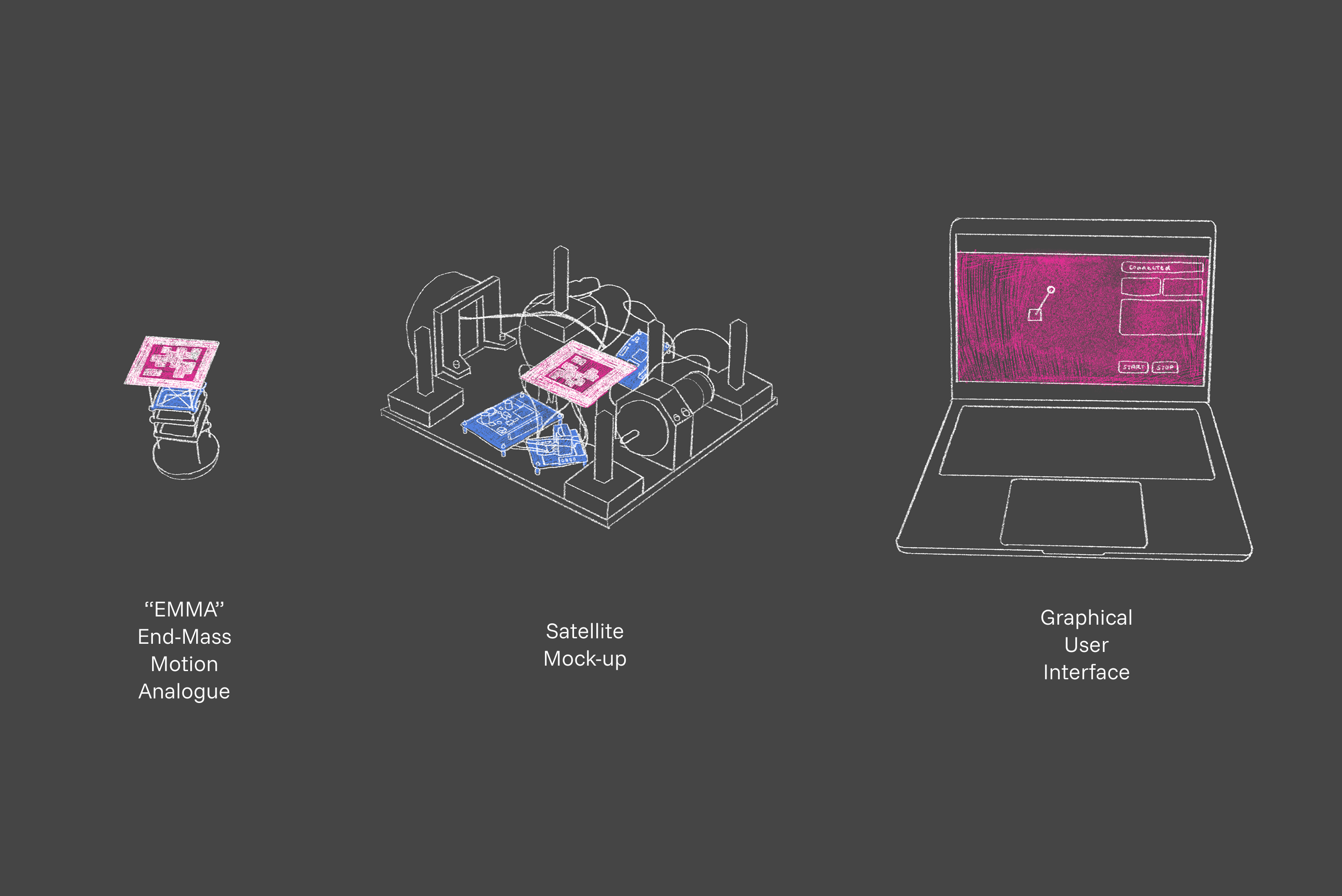
I implemented 3 control flows, all initiated from the main controller (Raspberry Pi):
- Controller → Solenoid activated release (via GPIO pin voltage control)
- Controller → EMMA's microblower (via bluetooth)
- Controller → Spin-up controller (via USB to the microcontroller)
I used software-based simulators to mock the response behaviors as the receiving counterpart is still under development (by other team members).
Caveat: The integration still took longer than expected. This was mainly due to confusion about differences in microcontroller models and their mappings, lack of communication that caused mismatch in code, and accidental damages (e.g. frying the raspberry PI on a steel plate :( ).
Learnings: Start integration early; More communication.
Document the setup steps as there can be a need to redo.
I presented a sketch of my vision for the GUI to the client: the interface is not only a monitoring tool, but it's also a controller.
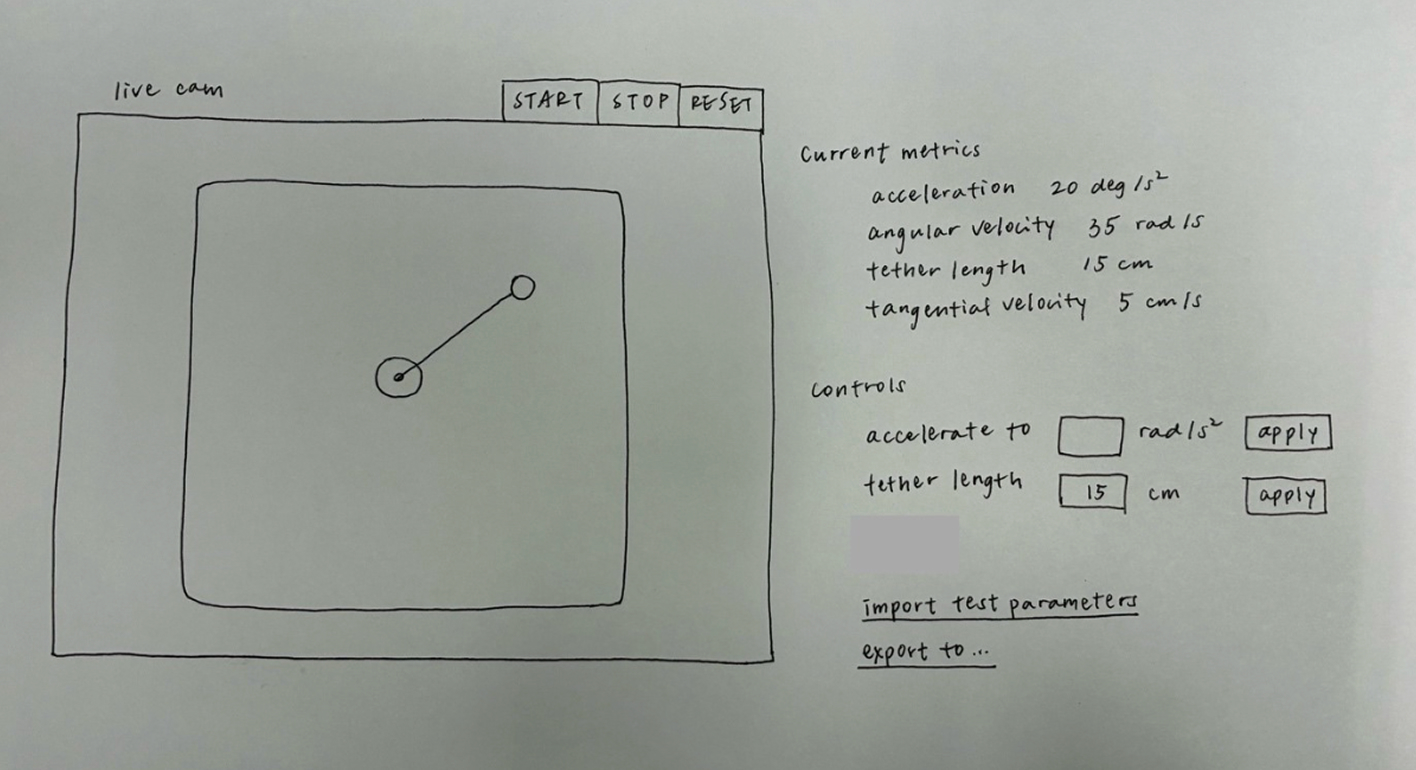
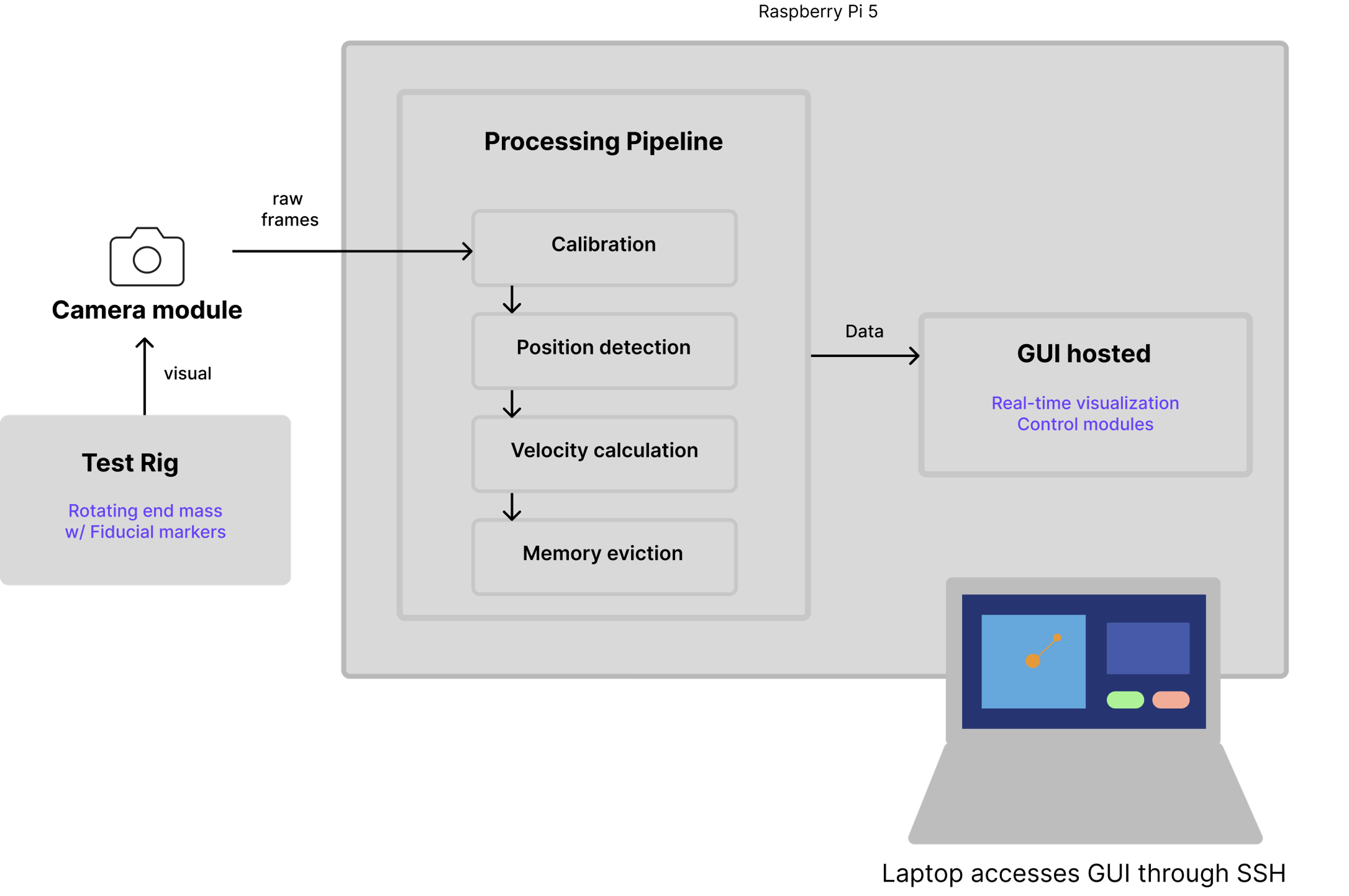
I designed the graphic processing pipeline so that the system is never storing over X raw frames. The visuals are recreated from the numerical positions, making computation more efficient.
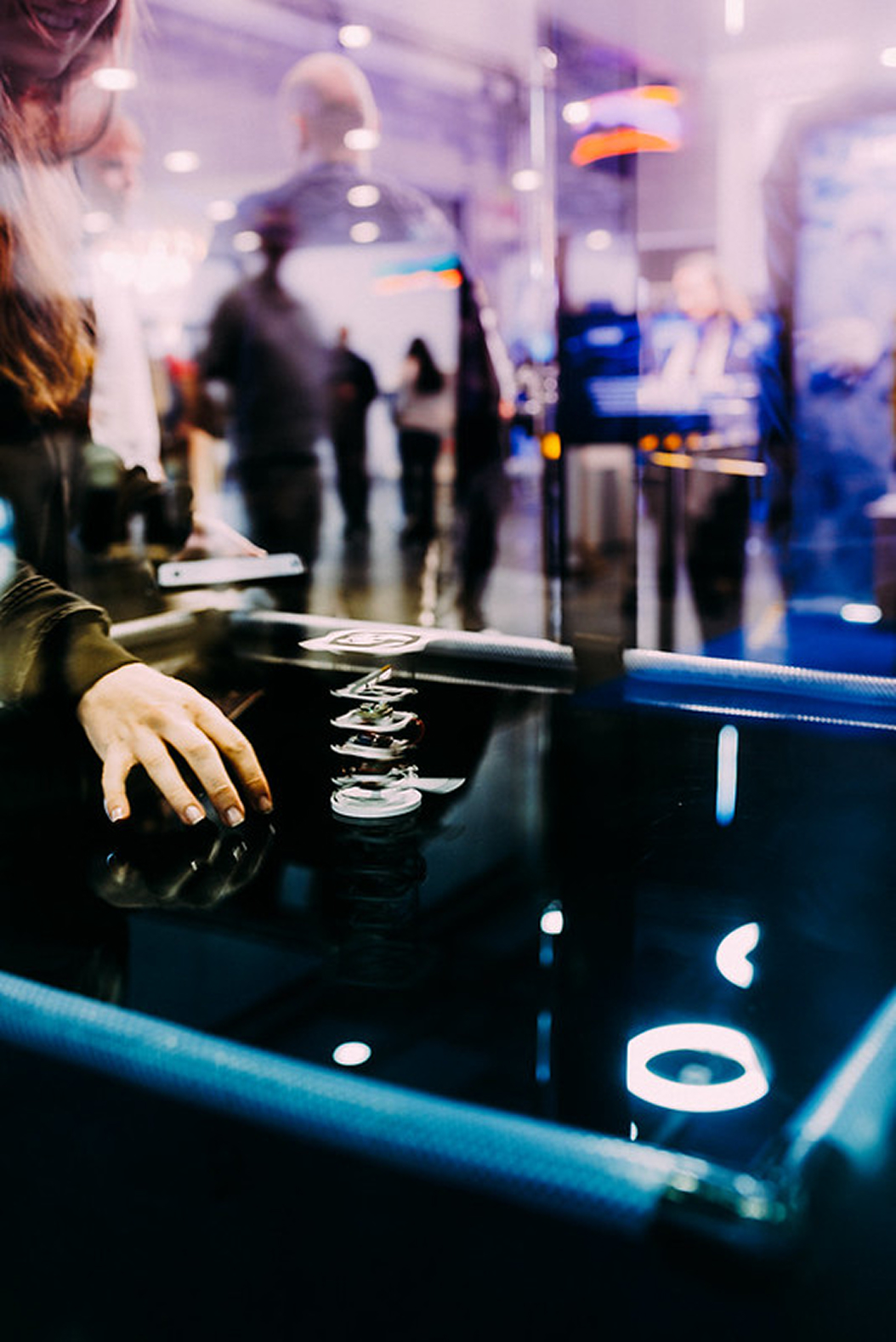
I designed an interactive game in order to make our product better understood by our audience during the Gala. It is basically a minigolf on a mini version of our system, where players could directly experience the "frictionless" system with direct engagement.
The game turned out to be an effective conversation starter, drawing visitors into questions about how the air bearing works, how its motion is being tracked, etc.
Takeaways
Design requirements are not always given at the start of a design process. I learned how to approach an unfamiliar domain and formulate the right questions to reach the real problem underneath the brief.
We were an international team. We coordinated through weekly meetings and shared documentation. I took an active role in keeping notes, documenting our decision-making, and making sure everyone stayed on the same page from ideation through final integration.